Tampilkan postingan dengan label referensi. Tampilkan semua postingan

Kamis, 09 September 2010

Teknologi Pengolahan Air Limbah

Pembuangan air limbah baik yang bersumber dari kegiatan domestik (rumah tangga) maupun industri ke badan air dapat menyebabkan pencemaran lingkungan apabila kualitas air limbah tidak memenuhi baku mutu limbah. Sebagai contoh, mari kita lihat Kota Jakarta. Jakarta merupakan sebuah ibukota yang amat padat sehingga letak septic tank, cubluk (balong), dan pembuangan sampah berdekatan dengan sumber air tanah. Terdapat sebuah penelitian yang mengemukakan bahwa 285 sampel dari 636 titik sampel sumber air tanah telah tercemar oleh bakteri coli. Secara kimiawi, 75% dari sumber tersebut tidak memenuhi baku mutu air minum yang parameternya dinilai dari unsur nitrat, nitrit, besi, dan mangan.
Trickling Filter
Trickling filter. Sebuah trickling filter bed yang menggunakan plastic media.
Bagaimana dengan air limbah industri? Dalam kegiatan industri, air limbah akan mengandung zat-zat/kontaminan yang dihasilkan dari sisa bahan baku, sisa pelarut atau bahan aditif, produk terbuang atau gagal, pencucian dan pembilasan peralatan, blowdown beberapa peralatan seperti kettle boiler dan sistem air pendingin, serta sanitary wastes. Agar dapat memenuhi baku mutu, industri harus menerapkan prinsip pengendalin limbah secara cermat dan terpadu baik di dalam proses produksi (in-pipe pollution prevention) dan setelah proses produksi (end-pipe pollution prevention). Pengendalian dalam proses produksi bertujuan untuk meminimalkan volume limbah yang ditimbulkan, juga konsentrasi dan toksisitas kontaminannya. Sedangkan pengendalian setelah proses produksi dimaksudkan untuk menurunkan kadar bahan peencemar sehingga pada akhirnya air tersebut memenuhi baku mutu yang sudah ditetapkan.
Parameter Konsentrasi (mg/L)
COD 100 – 300
BOD 50 – 150
Minyak nabati 5 – 10
Minyak mineral 10 – 50
Zat padat tersuspensi (TSS) 200 – 400
pH 6.0 – 9.0
Temperatur 38 – 40 [oC]
Ammonia bebas (NH3) 1.0 – 5.0
Nitrat (NO3-N) 20 – 30
Senyawa aktif biru metilen 5.0 – 10
Sulfida (H2S) 0.05 – 0.1
Fenol 0.5 – 1.0
Sianida (CN) 0.05 – 0.5
Batasan Air Limbah untuk Industri
Kepmen LH No. KEP-51/MENLH/10/1995
Namun walaupun begitu, masalah air limbah tidak sesederhana yang dibayangkan karena pengolahan air limbah memerlukan biaya investasi yang besar dan biaya operasi yang tidak sedikit. Untuk itu, pengolahan air limbah harus dilakukan dengan cermat, dimulai dari perencanaan yang teliti, pelaksanaan pembangunan fasilitas instalasi pengolahan air limbah (IPAL) atau unit pengolahan limbah (UPL) yang benar, serta pengoperasian yang cermat.
Dalam pengolahan air limbah itu sendiri, terdapat beberapa parameter kualitas yang digunakan. Parameter kualitas air limbah dapat dikelompokkan menjadi tiga, yaitu parameter organik, karakteristik fisik, dan kontaminan spesifik. Parameter organik merupakan ukuran jumlah zat organik yang terdapat dalam limbah. Parameter ini terdiri dari total organic carbon (TOC), chemical oxygen demand (COD), biochemical oxygen demand (BOD), minyak dan lemak (O&G), dan total petrolum hydrocarbons (TPH). Karakteristik fisik dalam air limbah dapat dilihat dari parameter total suspended solids (TSS), pH, temperatur, warna, bau, dan potensial reduksi. Sedangkan kontaminan spesifik dalam air limbah dapat berupa senyawa organik atau inorganik.

Teknologi Pengolahan Air Limbah

Tujuan utama pengolahan air limbah ialah untuk mengurai kandungan bahan pencemar di dalam air terutama senyawa organik, padatan tersuspensi, mikroba patogen, dan senyawa organik yang tidak dapat diuraikan oleh mikroorganisme yang terdapat di alam. Pengolahan air limbah tersebut dapat dibagi menjadi 5 (lima) tahap:
  1. Pengolahan Awal (Pretreatment)
    Tahap pengolahan ini melibatkan proses fisik yang bertujuan untuk menghilangkan padatan tersuspensi dan minyak dalam aliran air limbah. Beberapa proses pengolahan yang berlangsung pada tahap ini ialah screen and grit removal, equalization and storage, serta oil separation.
  2. Pengolahan Tahap Pertama (Primary Treatment)
    Pada dasarnya, pengolahan tahap pertama ini masih memiliki tujuan yang sama dengan pengolahan awal. Letak perbedaannya ialah pada proses yang berlangsung. Proses yang terjadi pada pengolahan tahap pertama ialah neutralization, chemical addition and coagulation, flotation, sedimentation, dan filtration.
  3. Pengolahan Tahap Kedua (Secondary Treatment)
    Pengolahan tahap kedua dirancang untuk menghilangkan zat-zat terlarut dari air limbah yang tidak dapat dihilangkan dengan proses fisik biasa. Peralatan pengolahan yang umum digunakan pada pengolahan tahap ini ialah activated sludge, anaerobic lagoon, tricking filter, aerated lagoon, stabilization basin, rotating biological contactor, serta anaerobic contactor and filter.
  4. Pengolahan Tahap Ketiga (Tertiary Treatment)
    Proses-proses yang terlibat dalam pengolahan air limbah tahap ketiga ialah coagulation and sedimentation, filtration, carbon adsorption, ion exchange, membrane separation, serta thickening gravity or flotation.
  5. Pengolahan Lumpur (Sludge Treatment)
    Lumpur yang terbentuk sebagai hasil keempat tahap pengolahan sebelumnya kemudian diolah kembali melalui proses digestion or wet combustion, pressure filtration, vacuum filtration, centrifugation, lagooning or drying bed, incineration, atau landfill.

Pemilihan Teknologi

Pemilihan proses yang tepat didahului dengan mengelompokkan karakteristik kontaminan dalam air limbah dengan menggunakan indikator parameter yang sudah ditampilkan di tabel di atas. Setelah kontaminan dikarakterisasikan, diadakan pertimbangan secara detail mengenai aspek ekonomi, aspek teknis, keamanan, kehandalan, dan kemudahan peoperasian. Pada akhirnya, teknologi yang dipilih haruslah teknologi yang tepat guna sesuai dengan karakteristik limbah yang akan diolah. Setelah pertimbangan-pertimbangan detail, perlu juga dilakukan studi kelayakan atau bahkan percobaan skala laboratorium yang bertujuan untuk:
  1. Memastikan bahwa teknologi yang dipilih terdiri dari proses-proses yang sesuai dengan karakteristik limbah yang akan diolah.
  2. Mengembangkan dan mengumpulkan data yang diperlukan untuk menentukan efisiensi pengolahan yang diharapkan.
  3. Menyediakan informasi teknik dan ekonomi yang diperlukan untuk penerapan skala sebenarnya.
Sedimentation
Sedimentation. Sebuah primary sedimentation tank di sebuah unit pengolahan limbah domestik. Sedimentation tank merupakan salah satu unit pengolahan limbah yang sangat umum digunakan.
Bottomline, perlu kita semua sadari bahwa limbah tetaplah limbah. Solusi terbaik dari pengolahan limbah pada dasarnya ialah menghilangkan limbah itu sendiri. Produksi bersih (cleaner production) yang bertujuan untuk mencegah, mengurangi, dan menghilangkan terbentuknya limbah langsung pada sumbernya di seluruh bagian-bagian proses dapat dicapai dengan penerapan kebijaksanaan pencegahan, penguasaan teknologi bersih, serta perubahan mendasar pada sikap dan perilaku manajemen. Treatment versus Prevention? Mana yang menurut teman-teman lebih baik?? Saya yakin kita semua tahu jawabannya. Reduce, recyle, and reuse.
Referensi: Pengelolaan Limbah Industri – Prof. Tjandra Setiadi, Wikipedia

Minggu, 05 September 2010

Online Calculators for Chemical Engineer 2nd

Physical Properties Physical properties of Water
Liquid-phase Diffusion coefficients
Gas Z-factor, Viscosity & Specific Gravity for a given Composition
Gas Z-factor & Viscosity for a given Specific gravity
API gravity Correction To 60°F
Fluid Flow Reynolds Number and Friction Factors
Vapor-Liquid 2-Phase Vertical downflow
Flow Through Packed Bed
Liquid Pipe flow: Pressure Drop calculation
Liquid Pipe flow: Pipe Length calculation
Liquid Pipe flow: Flow Rate calculation
Liquid Pipe flow: Pipe Diameter calculation
Gas flow in Horizontal Pipeline
Gas flow in Inclined Pipeline
Heat Transfer Shell & Tube Heat Exchanger: Corrected LMTD
Air-cooled Heat Exchanger Design
Equipment Sizing Sizing Of Liquid-Vapor Separators
Partial Volumes Of Tanks
Orifice Sizing for fluid flow
Gas Compressor performance
Mass Transfer Multicomponent Equilibrium Flash Calculations
Packed-Tower Sizing
Economics Basic cashflow analysis
Project selection/Capital allocation by Ranking method
Measurement Units  Units Conversion Calculators
Units Conversion factors
Other Calculators  Petroleum Engineering Calculators
Chemistry Calculators
Mechanical Engineering Calculators
Civil Engineering Calculators

Online Calculators for Chemical Engineer

Handbook of Chemical Engineering Calculations

 CHOPEY, Handbook of Chemical Engineering Calculations

download disini bro

William D. Baasel - Preliminary Chemical Engineering Plant Design

 William D. Baasel - Preliminary Chemical Engineering Plant Design

download disini bro

Harry Silla, Chemical Process Engineering Design and Economics

Harry Silla, Chemical Process Engineering Design and Economics

download disini bro

Coulson & Richardson's, Chemical Engineering Design vol 6

 Coulson & Richardson's, Chemical Engineering Design vol 6

download disini bro

Fogler, Elements of Chemical Reaction Engineering

 Fogler, Elements of Chemical Reaction Engineering 3ed, solution manual

download disini bro

Chemical reaction engineering

Octave Levenspiel, Chemical reaction engineering (3ed., Wiley, 1998) 

download disini bro

Introduction to Chemical Engineering Thermodynamics Solution Manual 7th ed

 download disini bro

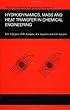
Hydrodynamics, Mass and Heat Transfer in Chemical Engineering

 
Andrei D. Polyanin, A.M. Kutepov, D.A. Kazenin , A.V. Vyazmin , "Hydrodynamics, Mass and Heat Transfer in Chemical Engineering "
CRC (September 27, 2001) | ISBN: 0415272378 | 408 pages | PDF | 16,4 mb

Hydrodynamics, Mass and Heat Transfer in Chemical Engineering contains a concise and systematic exposition of fundamental problems of hydrodynamics, heat and mass transfer, and physicochemical hydrodynamics, which constitute the theoretical basis of chemical engineering in science. Areas covered include: fluid flows; processes of chemical engineering; mass and heat transfer in plane channels, tubes and fluid films; problems of mass and heat transfer; the motion and mass exchange of power-law and viscoplastic fluids through tubes, channels, and films; and the basic concepts and properties of very specific technological media, namely foam systems. Topics are arranged in increasing order of difficulty, with each section beginning with a brief physical and mathematical statement of the problem considered, followed by final results, usually given for the desired variables in the form of final relationships and tables.


download disini bro

indowebster
depositfile

Unit Operation of Chemical Engineering

 First published in 1956, is one of the oldest chemical engineering textbooks still in widespread use. The current Seventh Edition, published in 2004, continues its successful tradition of being used as a textbook in university undergraduate chemical engineering courses. It is widely used in colleges and universities throughout the world, and often referred just "McCabe-Smith-Harriott" or "MSH".

 download disini bro

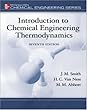
Introduction to Chemical Engineering Thermodynamics


Publisher: McGraw-Hill Science/Engineering/Math | 2004-11-12 | ISBN 0073104450 | Pages: 840 | PDF | 11 MB
Introduction to Chemical Engineering Thermodynamics, 7/e, presents comprehensive coverage of the subject of thermodynamics from a chemical engineering viewpoint. The text provides a thorough exposition of the principles of thermodynamics and details their application to chemical processes. The chapters are written in a clear, logically organized manner, and contain an abundance of realistic problems, examples, and illustrations to help students understand complex concepts. New ideas, terms, and symbols constantly challenge the readers to think and encourage them to apply this fundamental body of knowledge to the
solution of practical problems.

download disini bro

Chemical Process Equipment: Selection and Design (Butterworth's Series in Chemical Engineering)

 
Chemical Process Equipment: Selection and Design (Butterworth's Series in Chemical Engineering) by James R. Couper (Repost)
Publisher: Butterworth-Heinemann (October 18, 1988) | ISBN: 0750693851 | Pages: 755 | PDF | 25 MB

"This is an excellent book that can serve as the text for an undergraduate course in plant design. It will also be very useful as a sourcebook for process-design engineers that work for smaller companies that do not have their own process equipment design standards. The new authors have done an outstanding job in updating and expanding the original book by Professor Walas"


download disini bro
rapidshare

Thermodynamics: Fundamentals for Applications (Cambridge Series in Chemical Engineering)

 J. P. O'Connell, J. M. Haile, "Thermodynamics: Fundamentals for Applications (Cambridge Series in Chemical Engineering)"
Cambridge University Press | 2005-05-16 | ISBN: 0521582067 | 672 pages | PDF | 3.1 MB
Thermodynamics: Fundamentals for Applications is a text for a first graduate course in chemical engineering. The focus is on macroscopic thermodynamics; discussions of modeling and molecular situations are integrated throughout. Underpinning this text is the knowledge that while thermodynamics describes natural phenomena, those descriptions are the products of creative, systematic minds. Nature unfolds without reference to human concepts of energy, entropy, or fugacity. Natural complexity can be organized and studied by thermodynamics methodology. The power of thermodynamics can be used to advantage if the fundamentals are understood. This text's emphasis is on fundamentals rather than modeling. Knowledge of the basics will enhance the ability to combine them with models when applying thermodynamics to practical situations. While the goal of an engineering education is to teach effective problem solving, this text never forgets the delight of discovery, the satisfaction of grasping intricate concepts, and the stimulation of the scholarly atmosphere.

download disini bro

Multicomponent Mass Transfer (Wiley Series in Chemical Engineering)

Author: Ross Taylor R. Krishna
Publisher: Wiley-Interscience
Publication Date: 1993-10-01
Number Of Pages: 616
Average Amazon Rating: 5.0
11.6 Mb pdf
Addresses the use of rigorous multicomponent mass transfer models for the simulation and design of process equipment. Deals with the basic equations of diffusion in multicomponent systems. Describes various models and estimations of rates of mass and energy transfer. Covers applications of multicomponent mass transfer models to process design. Includes appendices providing necessary mathematical background. Contains a large number of numerical examples worked out in detail.

download disini bro

An Introduction to Chemical Engineering Kinetics and Reactor Design

This book manages to present a powerful insight into chemical kinetics, giving the reader the knowledge necessary to fully understand chemical reactor design. However, it also presents tools useful to everyone who works with kinetics/reactor design I recommend it both to undegraduate and graduate students.

Book Info:
Published in 1977
Author Charles G. Hill
ISBN 0471396095  Size 13.65MB

download disini bro

Chemical Engineering Fluid Mechanics, Second Edition


Combining theoretical and empirical perspectives into a clearly organized and comprehensive text, Chemical Engineering Fluid Mechanics, Second Edition discusses the principal behavioral concepts of fluids and the basic methods of analysis for solving a variety of engineering situations. Drawing on the author’s 35 years of experience, the book covers the problems and concerns of performance, equipment operation, and sizing and selection from the viewpoint of a process engineer-with real-world engineering problems. It supplies over 400 end-of-chapter problems and examples to reinforce essential concepts and contains over 1100 equations, literature references, illustrations, and tables.

download disini bro

Sabtu, 04 September 2010

Plant Design and Economics for Chemical Engineers

Title: Plant Design and Economics for Chemical Engineers
(Mcgraw Hill Chemical Engineering Series)

Author: Max Stone Peters
Publisher: McGraw-Hill Companies
Publication Date: 1990-07-01
Number Of Pages: 992
14.1 Mb pdf

download disini bro

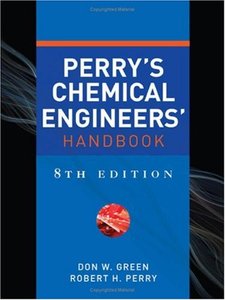
Perry's Chemical Engineers' Handbook, Eighth Edition

Don Green, Robert Perry, "Perry's Chemical Engineers' Handbook, Eighth Edition"
McGraw-Hill Professional; 8 edition (October 23, 2007) | ISBN-10: 0071422943 | 2400 Pages | PDF | 55,2 MB 

download disini bro